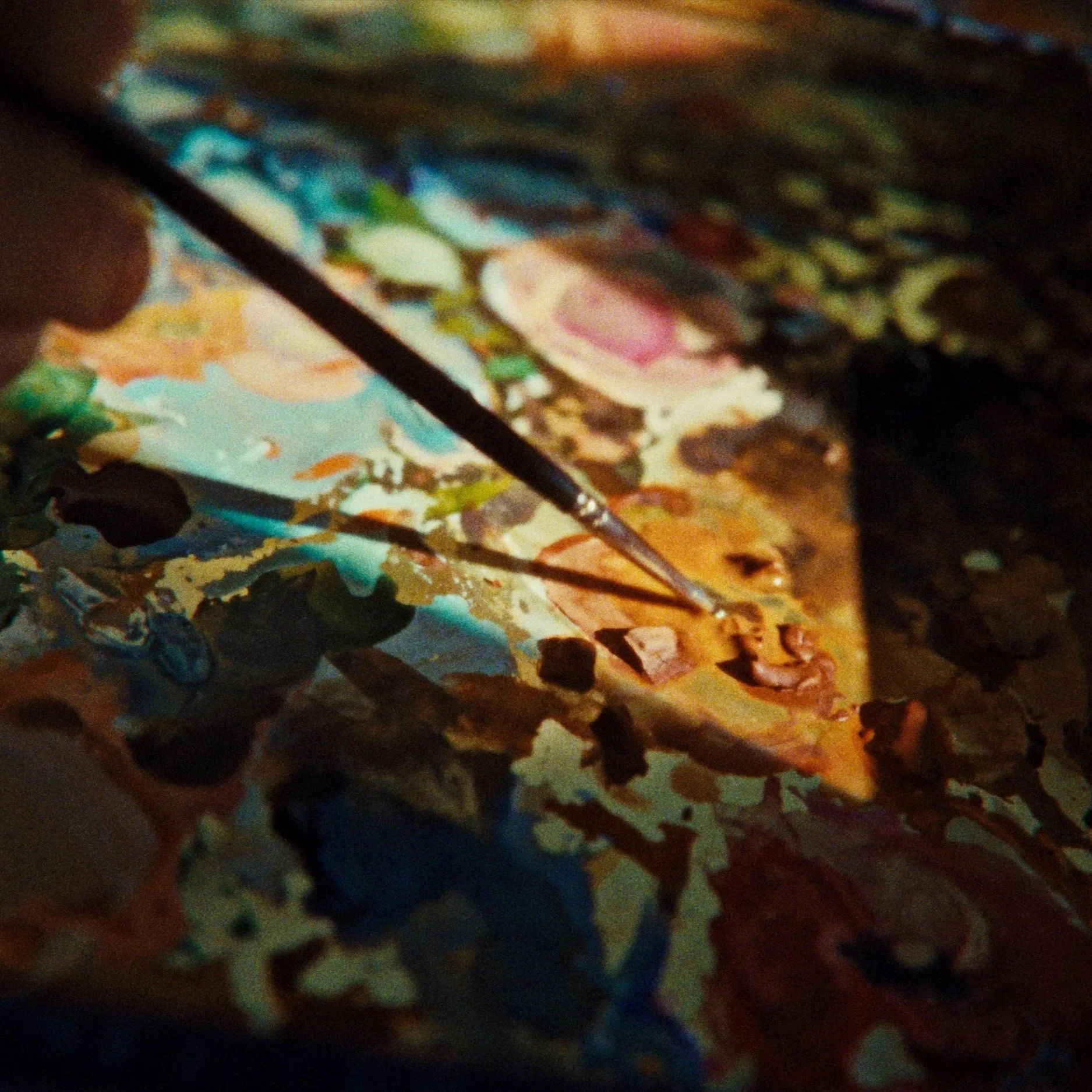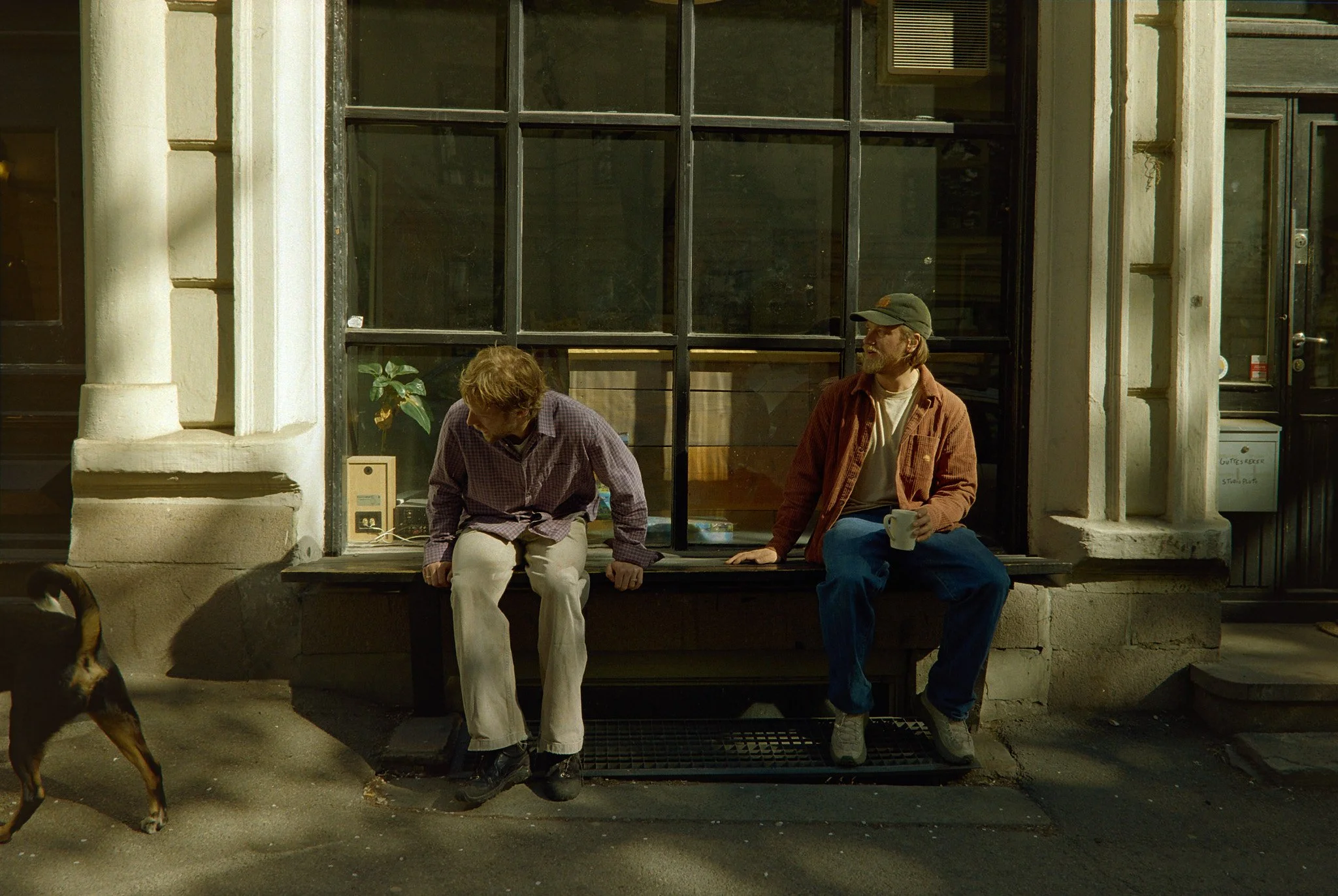
Guttestreker/Mirrors of Mortality
Petter Malterud Grøndahl and Christoffer Kroge Christensen had drawn most of their lives. Then studies and jobs came first. One late night in the autumn of 2015 they started drawing together, and didn't stop.
Ten years on, they've shown in New York and built one of Norway's most dedicated followings. People get their work tattooed on their backs. Neither went to art school. We think that's part of why it looks like nothing else.
It looks fun at first. The colours are bright, the scenes almost cartoonish, busy with life. Then you get closer, and it turns. Every detail is deliberate, and every figure is an argument. They call it illustrated philosophy: a picture never starts with an image, but with a subject, usually scientific or historical, read into deeply before a single line is drawn. What looks like a playful scene is really a thesis.
Spend time with their work and you start to recognise faces. Three keep returning, picture after picture. A private mythology, built over ten years: the Imperialist, a heavy figure in a top hat; the Ape, the natural world, furious and fighting back but with no voice; and the Robot, the machine we made. Once you've met them, you see them everywhere.
Mirrors of Mortality is the first time their work comes to Trondheim.
Guttestreker/Mirrors of Mortality
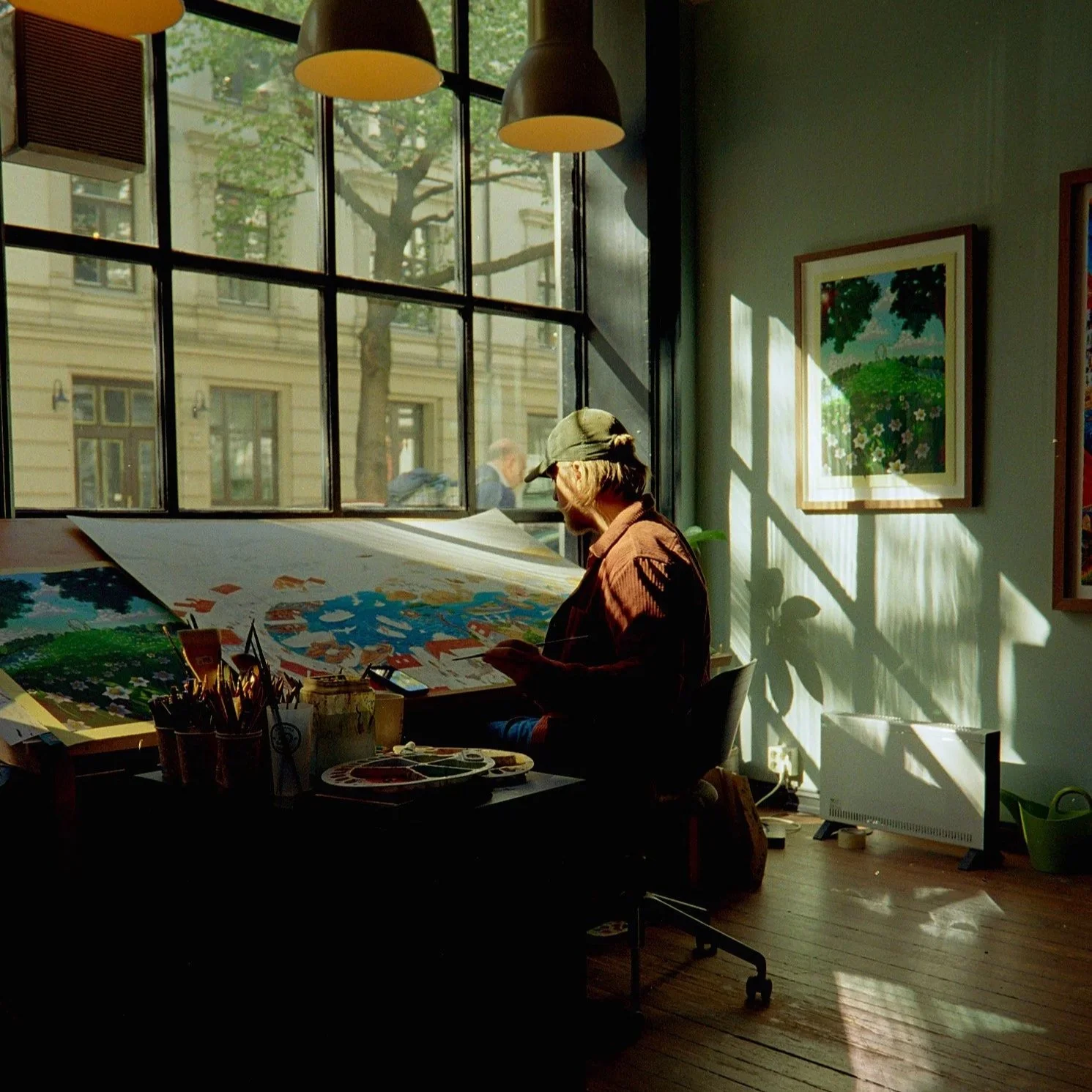
An Invitation to Obsession
We reached out to Guttestreker about half a year ago. On paper it was an odd invitation. A space with no history, run by two film directors and a musician who had never run a gallery before. Not the obvious place to show.
But Guttestreker work the way the three of us do. None of us arrived here in a straight line, and none of us trust much beyond instinct and the sense that a thing isn't good enough yet. They found the idea strange and interesting enough to take the risk, and said yes to being the first to show in our space. Then they went further. They decided to make two entirely new works for it.
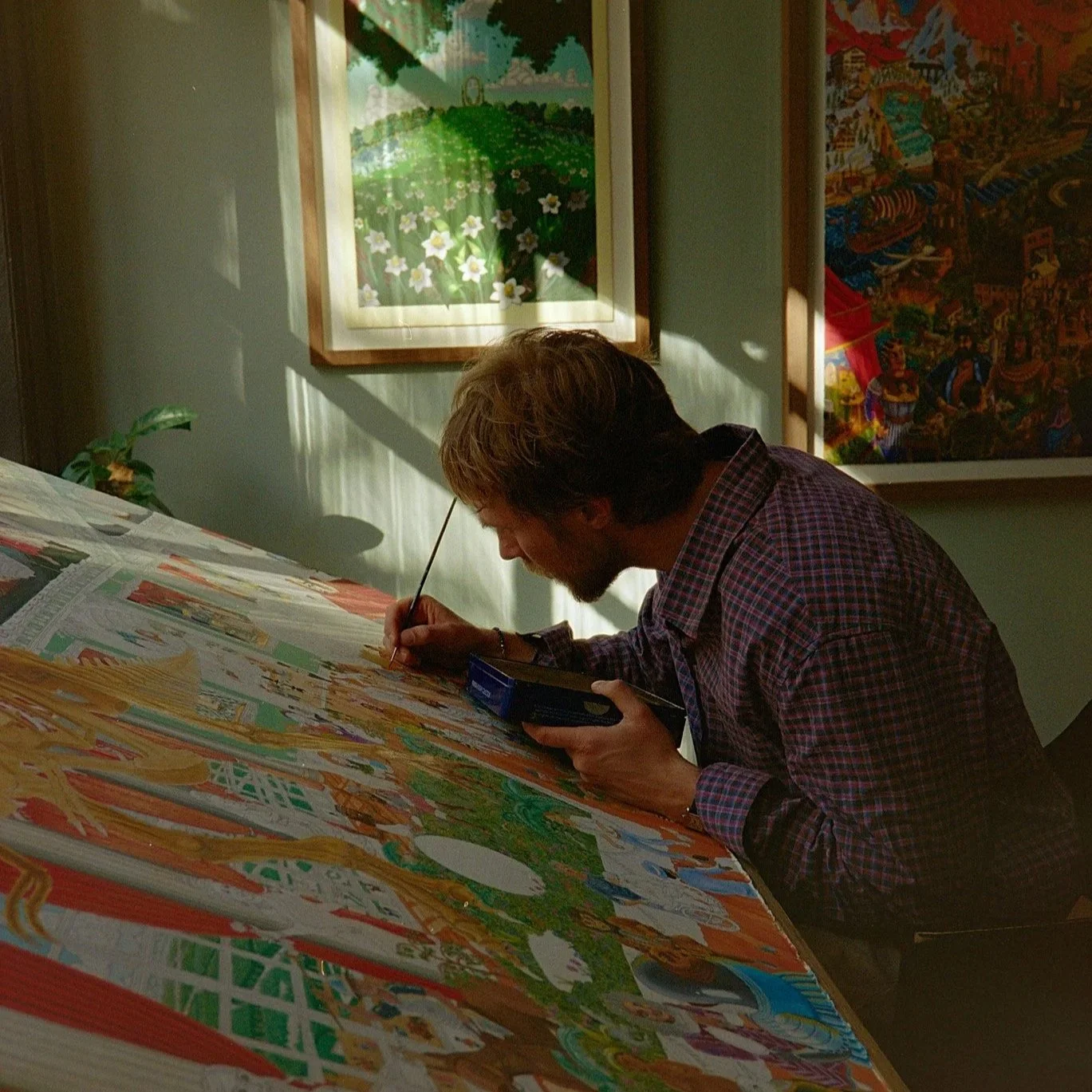
We thought we understood obsessive work. It's most of why The Directory/ exists at all: none of us are good at leaving a thing alone before it's right. Then we watched a Guttestreker picture being made, and recalibrated. Each one takes close to six months. A full composition drawn in pencil, then redrawn in fineliner, then painted, this time in gouache. But the months aren't the striking part. It's the density of thought underneath them. A figure in the corner that most people will glance past in half a second turns out to rest on a scientific paper, a historical event, a long disagreement between the two of them. Nothing in the picture is decoration. And we came away slightly humbled, which doesn't happen often.
For each work in this exhibition we've made a short film. They go close, into the process, the pencil lines, the detail you'd never catch from across a room. What's written here is only a way in. The films, and the paintings themselves, are where the real looking happens.